|
edit SideBar
|
Species / Sulcogladius Powisii
Stromboidea
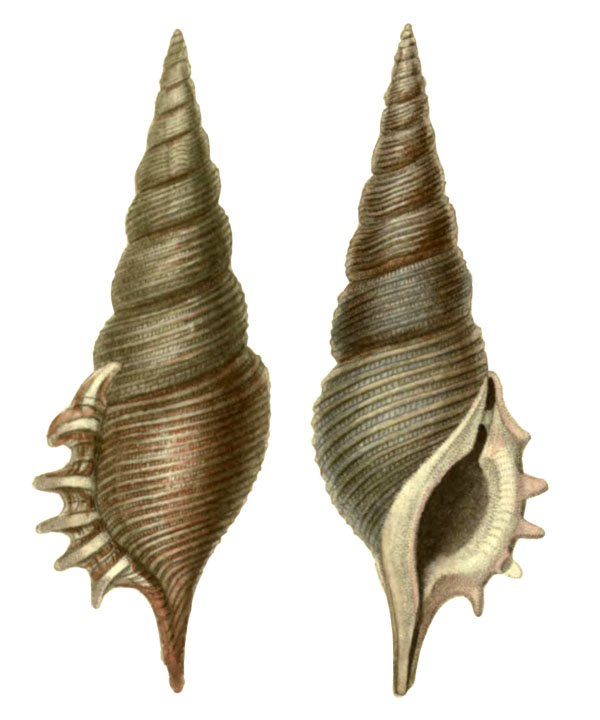
Original Description of Rostellaria powisii by Petit de la Saussaye, 1840:
- "Testa fusiformi-turrita, elongata, crssa, albida, rufo-maculata, transversim sulcato-costulata, striis tenuissimis longitudinalibus sulcis vix decussantibus, suturis late canaliculatis; anfractibus convexiusculis; apertura intus albido-rosea; labro crassissmo, rugoso, margine 5-dentato, extus marginato rufo, sub dente prima canali brevi donato; columella reflexa, crassiuscula; rostro, brevi, recto."
Locus typicus: "...des côtes de la Chine"
Length of type: 58 mm
Etymology: named after a friend of Petit de la Saussaye, Mr. Powis
Synonymy and History
Sulcogladius powisii (Petit de la Saussaye, 1840: 326) (Rostellaria)
- ? Syn.: Tibia laurenti Duchamps, 1992: 47-58
- Syn.: Rostellaria povisii Sowerby2nd, 1842: 22, pl. 5 figs 5, 6 [err.pro powisii].
- Syn.: Rostellaria powisii Recl. var. abbyssicola Schepman, 1909: 154, pl. 11 fig. 5.
- ? Syn.: Rostellaria (s.str.) powisii var. modesta Martin, 1899: 191, pl. 30 figs 343-344 (†).
- Syn.: Tibia powisi [sic!] moretonensis Romagna Manoja, 1977: 7 [unavailable; published as a conditional name after 1960, ICZN art. 15.1; no type specimens]
- ? Syn.: Tibia (Sulcogladius) powisii niasensis Wissema, 1947: 90, pl. 4 figs 109-110 (†)
- ? Syn.: Rostellaria (Sulcogladius) powisii timorensis Koperberg, 1931: 127 (†)
1842
Rostellaria powisii in Petit de la Saussaye, 1842, pl. 53
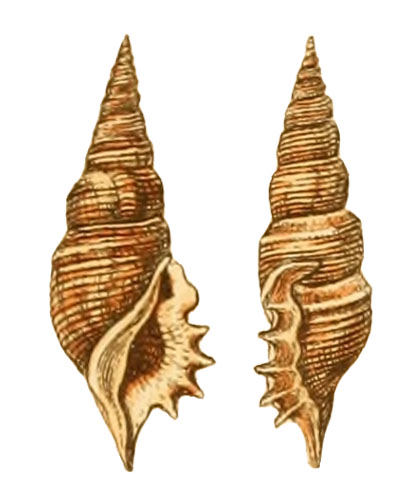
Rostellaria povisii in Sowerby, 1842, pl. V, fig. 4, 5
1843
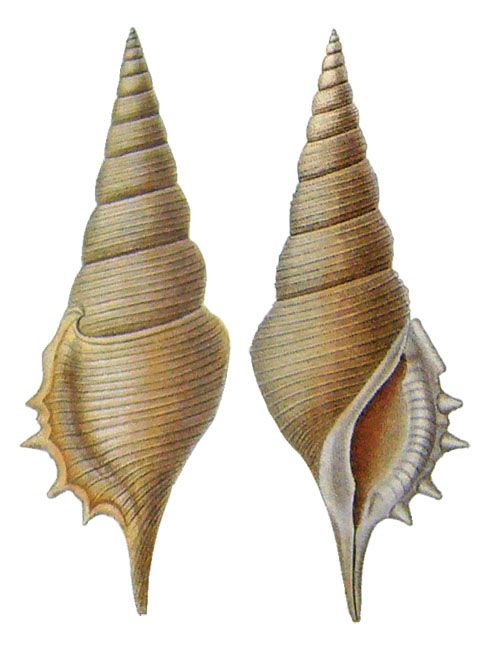
Rostellaria powisii in Kiener, 1843, pl. 2, fig. 2
1851
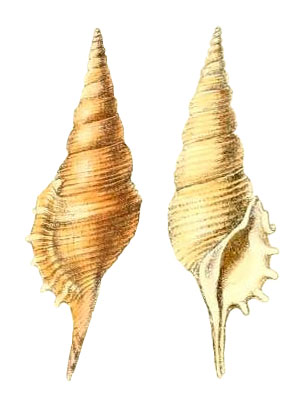
Rostellaria povisii in Reeve, 1851, Rostellaria, pl. 2, fig. 4 a, b
1899
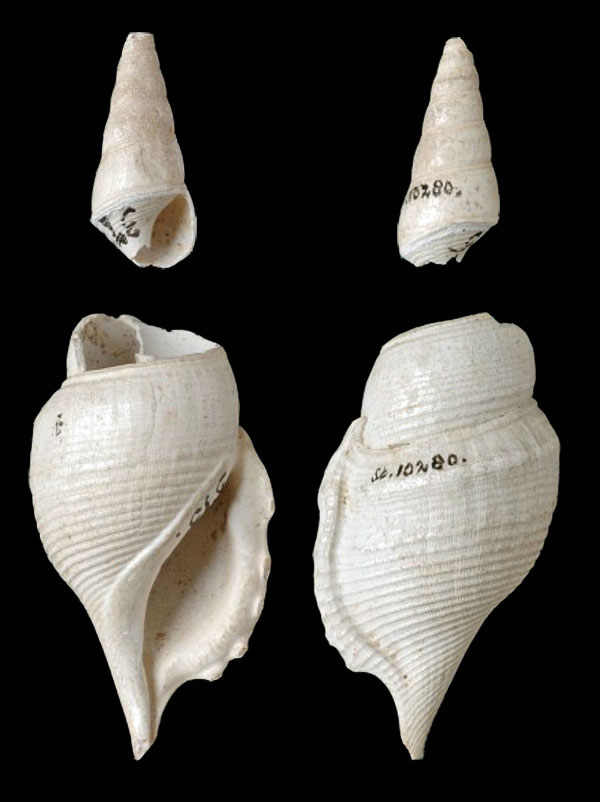
Original Description of Rostellaria Powisii modesta var. nov. by Martin, 1899, p. 191:
- "Die beiden abgebildeten Bruchstücke, welche von demselben Fundorte stammen, gehören unstreitig einer und derselben Art, vielleicht sogar demselben Individuum, an, da die höchst charakteristische Skulptur ihre Zusammengehörigkeit ganz sicher stellt. Die länglich-spindelförmige Schale zeigt ein aus wenig gewölbten Umgängen bildet sich eine zarte, fein punktirte Furche aus, welche die hintere Naht begleitet; später entsteht hier eine scharfe Längsleiste, welche beiderseits von einer deutlichen Furche eingefasst wird, und diese Furchen sind mit sehr zierlichen, der Zuwachsstreifung entsprechenden Querleisten dicht bedeckt. Eine weit zartere Furche, welche durch dieselbe Querskulptur fein punktirt erscheint, folgt etwas weiter nach vorne, und endlich tritt eine solche auch noch längs der vorderen Naht der Umgänge auf, bis sich hier mit dem Anwachsen der Schale ebenfalls scharf geschnittene Spiralleisten ausbilden. Auf der letzten Mittelwindung ist eine grössere Anzahl von Spirale vorhanden, deren Deutlichkeit von vorne nach hinten abnimmt; aber auf ihrer hinteren Hälfte bleibt noch immer ein glatter Theil bestehen, an dem die Spiralen bis auf eine feine Liniirung ganz fehlen. Dieselbe Liniirung bemerkt man übrigens auch auf den glatten Theilen der älteren Umgänge. Die wohl entwickelten Zuwachsstreifen sind nut wenig zurückgebogen und soweit die Spiralskulptur hervortritt, bringen sie eine zierliche Gitterung hervor. An der Schlusswindung entsteht ein Spiralwinkel, welcher namentlich auf der Rückenfläche des Gehäuses sehr deutlich hervortritt; hinter demselben ist die Schale abgeflacht, vor ihm etwas ausgehöhlt. Die vordere Grenze des concaven Abschnittes fällt mit der Nahtlinie zusammen, und vor ihr ist die bis zur Stirn reichende Spiralskulptur am schärfsten ausgeprägt, Hand in Hand damit auch die Gitterung. Hinten links, genau gegenüber der Aussenlippe, ist die Schlusswinding etwas komprimiert, als ob sich daselbst ein schwacher Querwulst ausbilden wollte. Die Mundöffnung ist länglich-eiförmig und hinten verengert, der Kanal ziemlich krz, etwas nach rechts gewendet, die hintere Rinne kurz und scharf zurückgebogen, so dass ihr Ende nicht über das vorderste Drittel der letzten Mittelwindung hinausreicht. Die Spindel ist mässig gebogen; die wohl entwickelte Innenlippe hebt sich scharf von ihr ab. Die rechte Lippe ist verdickt, aussen durch eine tiefe Furche begrenzt, innen mit Runzeln besetzt; ihr Rand besitzt hinten, vor dem Spiralwinkel, einen halbmondförmigen Ausschnitt; weiter nach vorne trug er vier Zähne, die an dem vorliegenden Objekte freilich nur unvollständig überliefert sind."
- "Von R. Powisii, einer seltenen Art von China, welche ich in London vergleichen konnte, unterscheidet sich das Fossil nur durch das Zurücktreten der Spiralskulptur am Gewinde, aber im übrigen theilt es alle Merkmale dieser höchst charakteristischen Art, so dass ich in der hervorgehobenen Verschiedenheit keinen Grund zur Abtrennung von der recenten Species, sondern nur zur Aufstellung einer besonderen Varietät sehen kann. Die Beiden dargestellten Reste stammen von Sonde, im Distrikte Gendingan."
Martin, 1899. p. 191, pl. 30, figs. 443, 444
Tibia (Sulcogladius) powisii modesta (Martin, 1899); Syntype; Pliocene; near Sondé Village, Madiun, Java Island, Indonesia; In Leloux & Wesselingh, 2009; Coll. Naturalis Leiden no. RGM 10280; Copyright Naturalis
- upper part 18 mm
- lower part 34 mm
1909
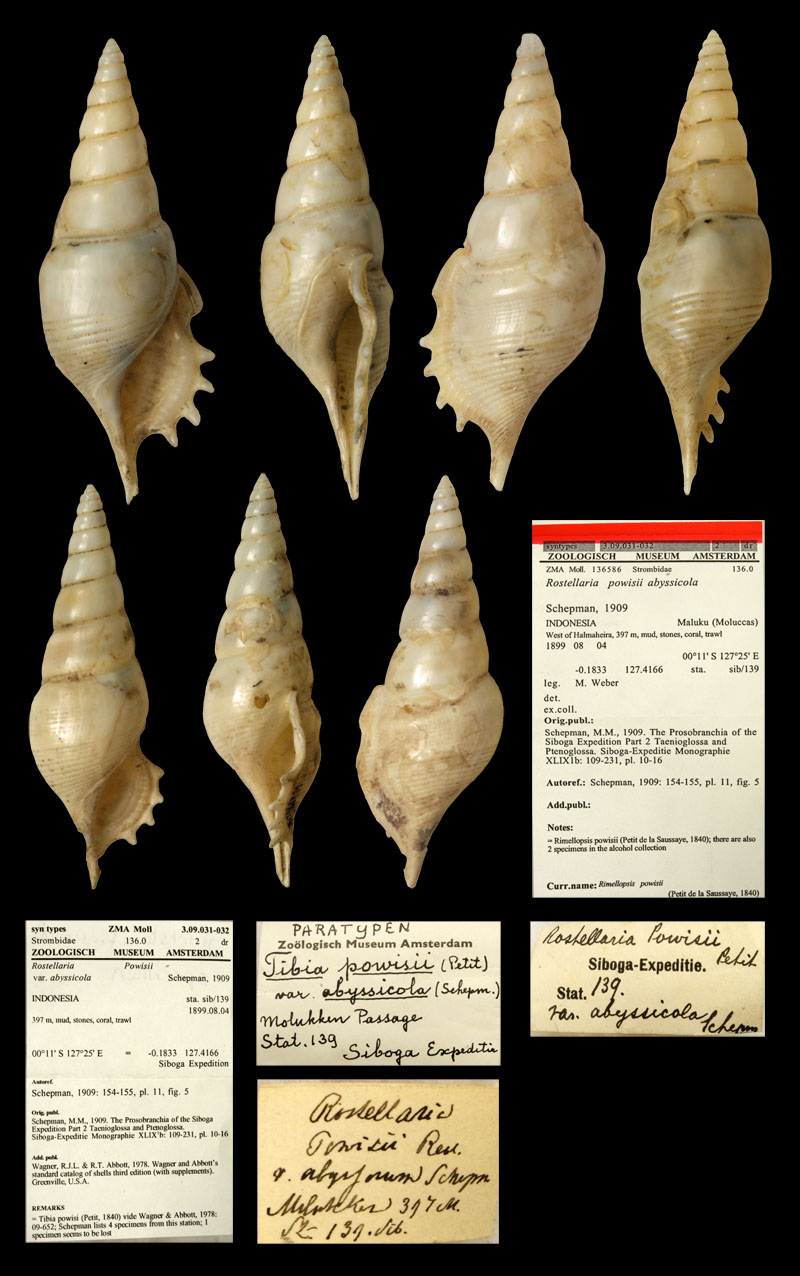
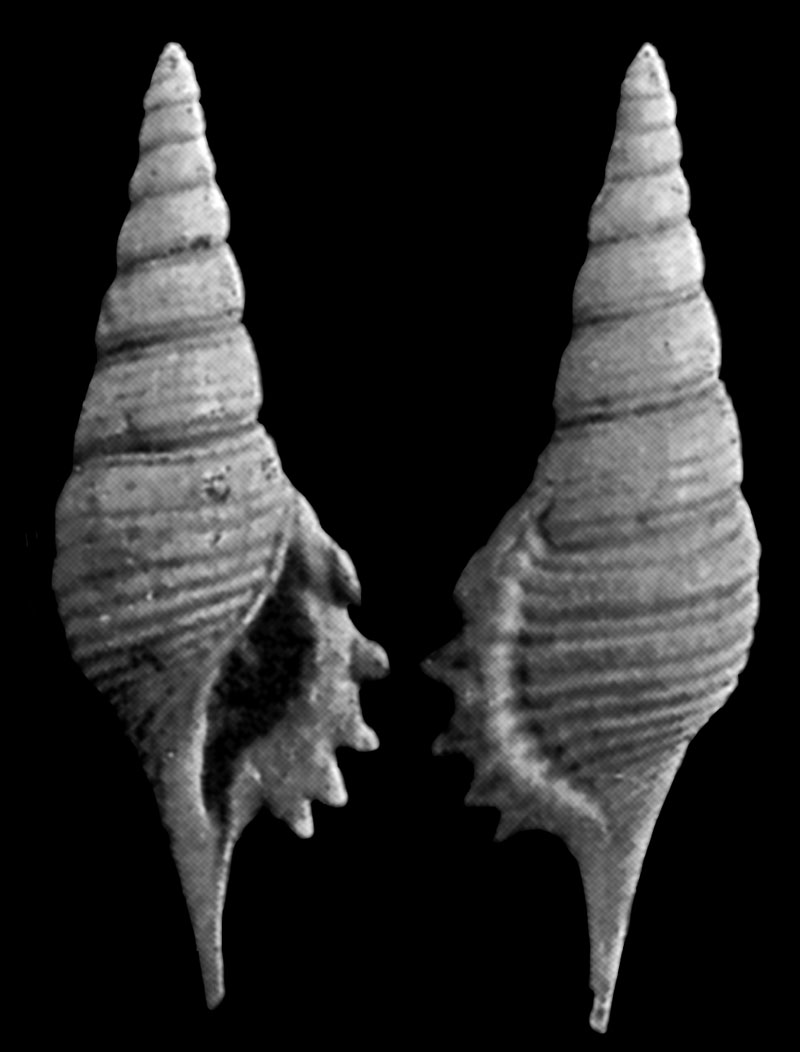
- Original Description of Rostellaria powisii var abyssicola by Schepman, 1909, p. 154:
- ”Shell small, whitish, thinner than the eype, the upper whorls nearly smooth, with only one conspicuous groove, bordering a narrow spiral cord, just below the suture; this is continuous until the aperture, the upper part of last whorl, below that groove, smooth on the ventral side, angular on the place where in the type runs a third of the lirae, on the back with indistinct spirals, beginning with a row of punctures, more conspicuous behind the apertural margin, base of last whorl with conspicuous spiral cords, separated by punctured grooves; denticles and other particularities of the aperture, as in the type.
- Locus typicus: “Stat. 139. 0° 11’ S., 127° 25’ E. Moluca-Passage. 397 M. Mud, stones and coral.”
- Measurements: “Length of largest specimen 39 Mill. of smallest 33 Mill., it may have been in both specimen a little more, since the canal seems to be slightly broken.”
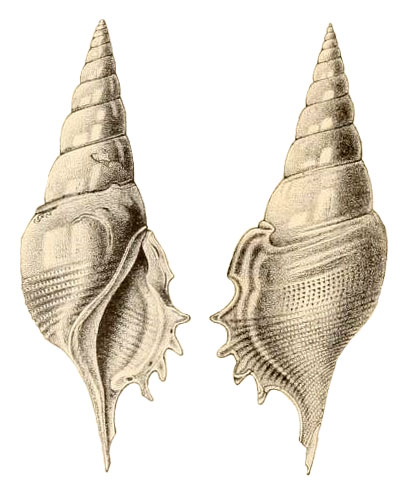 Rostellaria powisii var. abyssicola Schepmann, 1909, pl. XI, fig. 5
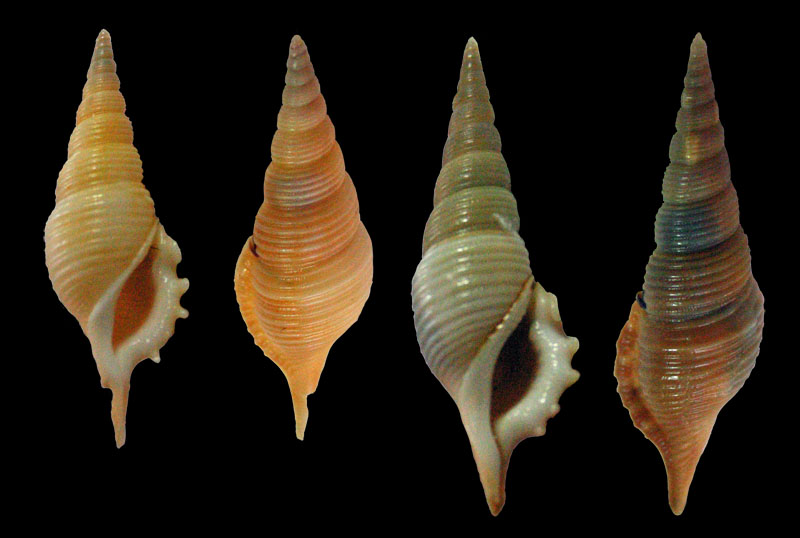
Rostellaria powisii abyssicola Schepmann, 1909; Syntypes; Siboga-Expedition, West of Halmaheira, Maluku (Moluccas), Indonesia; t: 38 mm, b: 34 mm; Coll. ZMA
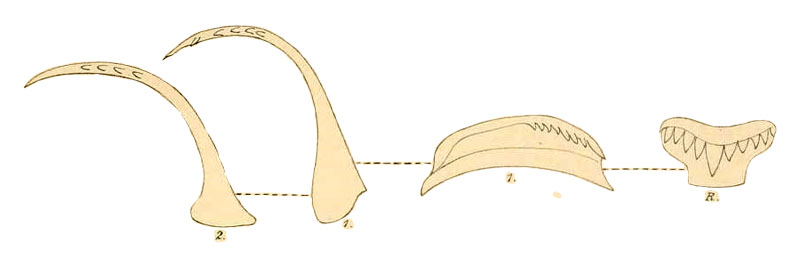
- Description of the radula of Rostellaria powisii by Schepman, 1909, p. 155:
- "The radula of a small specimen from Stat. 306 agrees in many respects with those of other Strombidae, it is short, with about 35 rows of teeth, its colour is yellowish. The rhachidian tooth ® has a body which is broad in front and suddenly narrower about halfway; its cusp has 11 denticles, of which the central one is the largest; the lateral tooth (1) has a transversely much elongated body and about 9 denticles on its reflected margin. The uncini (U) are long, slender, much curved, with a few small denticles on the sides. It was a male specimen with a long slender penis, ending in a thickened, spear-shaped point."
Teeth of radula of Rostellaria powisii Schepman, 1909, pl. XVI, fig. 2
1919
Rostellaria powisii modesta
Martin, 1919. Geol. Reichs.Mus. Leiden Samml., p. 92
1947
Tibia (Sulcogladius) powisii niasensis Wissema, 1947, pl. 4, figs. 109, 110
1972
Ladd, 1972, p. 56 on Tibia (Tibia) powisii modesta (Martin):
- "The Fiji fossils, now totaling more than 70 specimens, are smaller than shells of the Holocene Tibia powisii and on practically all the fossils the sculpture is greatly reduced, if not obsolete, on the early whorls.
- Measurements of the figured specimens from station B107 (=817) Vanua Levu, Fiji: USNM 648455 - length 31.2 mm, diameter 12.7 mm; USNM 650617 - length (incomplete) 19.6 mm, diameter 10.7 mm.
- Occurrence. - Previously known in Fiji from three localities (stations 165, 304, 306) in north-central and northwest Viti Levu, Fiji (Ladd, 1934, p. 217) has since been collected from four additional stations on Viti Levu (F-238, MR-69, MR-16, and C-89). The species has also been found in great abundance on Vanua Levu at station B-107 (=817) and at nearby localities K-63 and K-138. Age of all Fijian occurrences probably Pliocene (Tertiary h).
- Martin's type material was collected from the Pliocene (Sonde-beds) of Java. The species has also been recorded from the Pliocene of Sumatra and Timor and from the upper Miocene of Timor and New Guinea (Altena, 1941, p. 46). The Holocene Indonesian shells described and figured by Schepman as Rostellaria powiwii abyssicola were obtained at a depth of nearly 400 meters and were interpreted as dwarfed forms with obsolete sculpture. I have not seen these specimens."
Specimens from private collections
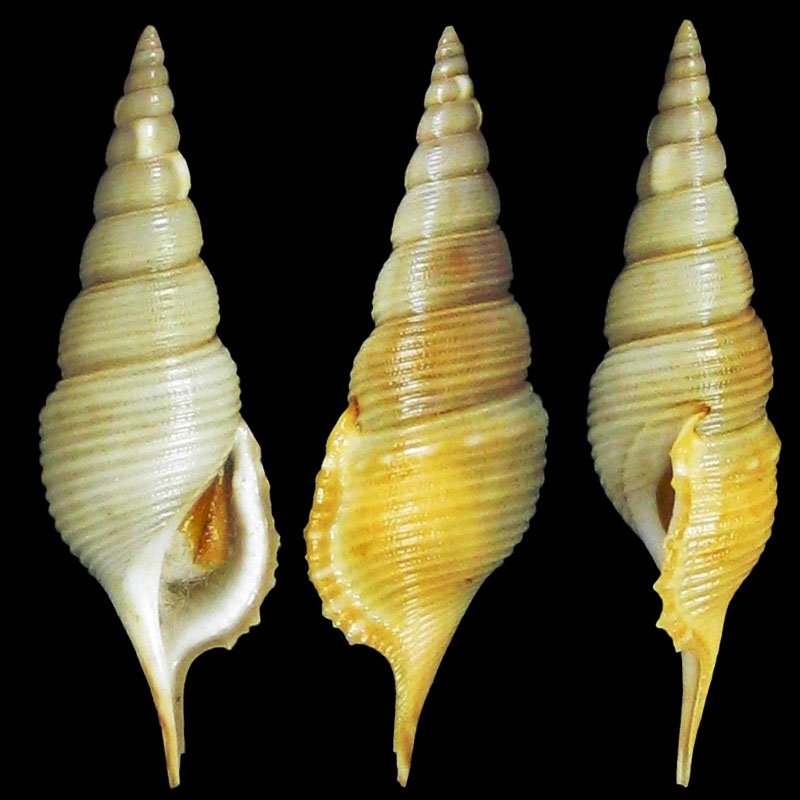
Rimellopsis powisii (Petit de la Saussaye, 1840); Philippines Islands; 48 mm; Coll. Paul Merrill
Sulcogladius powisii (Petit de la Saussaye, 1840); Coll. Ulrich Wieneke
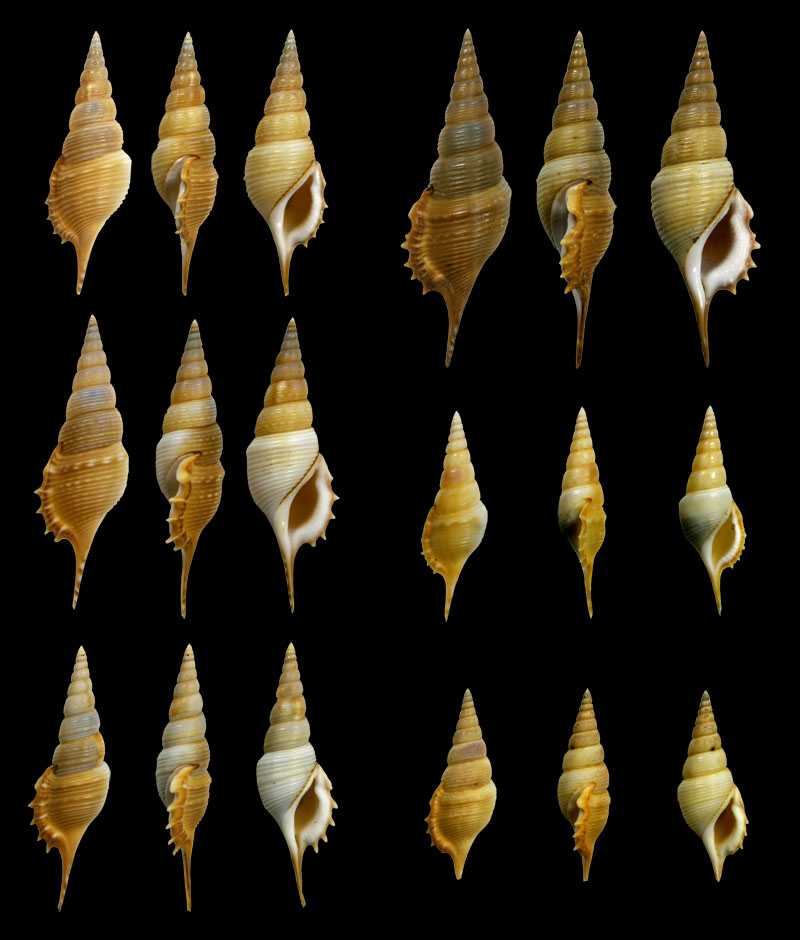
Sulcogladius powisii (Petit de la Saussaye, 1840); off Ranong, Ranong Province, Thailand, Andaman Sea; 2008; Coll. René Vanwalleghem
- 58 mm
- 62 mm
Specimens from institutional collections
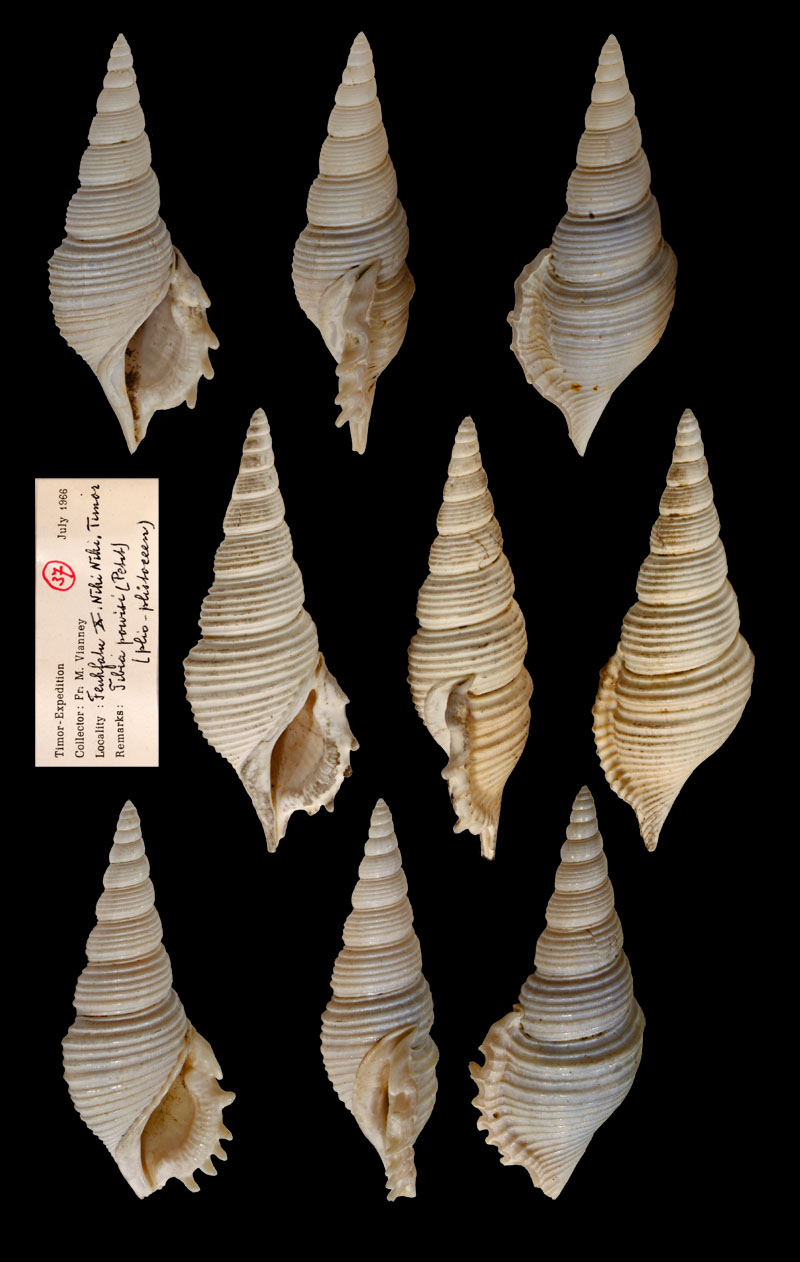
Tibia powisii (Petit de la Saussaye, 1840); Pliocene/Pleistocene; Feukfatu, Niki Niki, Timor Island, Indonesia; 7/1966; Collected by M. Vianney; Coll. Naturalis
Tibia powisii (Petit de la Saussaye, 1840); Pleistocene (?); t, bl: 36 mm, bm: 36 mm, br: 20 mm; Coll. Naturalis
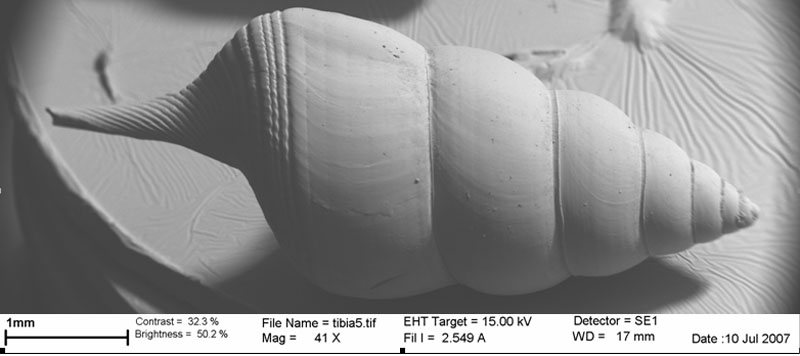
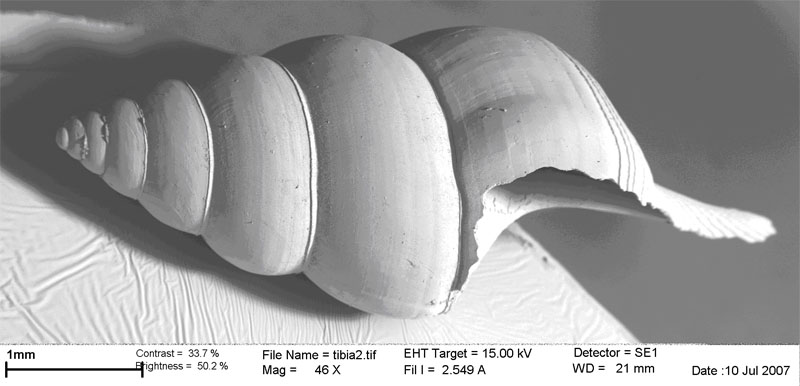
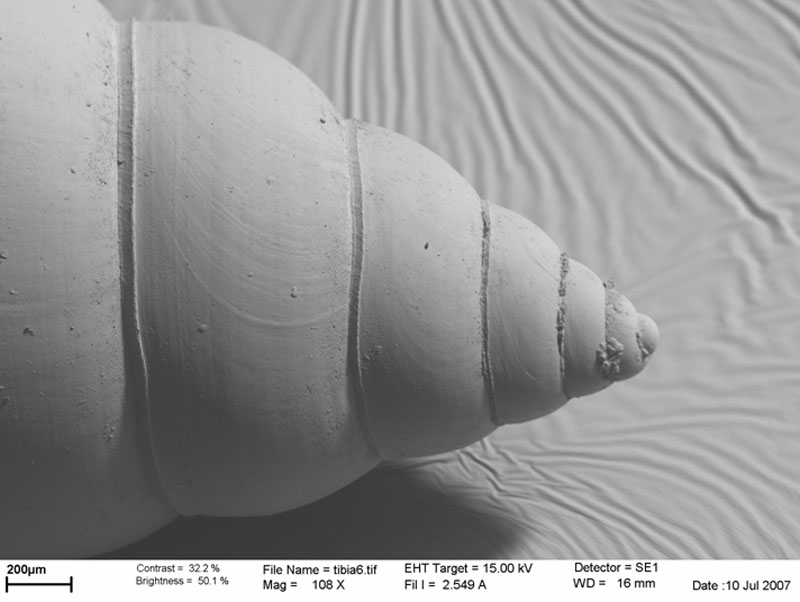
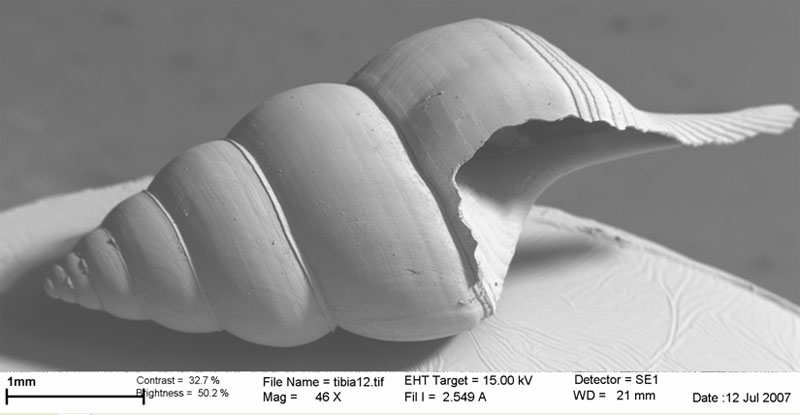
Protoconchs of Sulcogladius powisii; Coll. Klaus Bandel
References
|