Stromboidea
Original Description of Lambis plicata by Röding, 1798, p. 65:
- "L. Plicata Der Wetterhahn. Gmel. Stromb. vittatus. sp 25.<delta>. Chem. 10. t. 157 f 1496. 2 St."
Locus typicus: Red Sea (designated by Abbott, 1960)
History and Synonymy
Dolomena plicata (Röding, 1798: 65) (Lambis)
- Syn.: Strombus deformis Gray. Griffith & Pidgeon, 1834: 600, pl. 25 (facing p. 82)
- Syn.: Strombus sibbaldi Sowerby. Kiener, 1843: 56, pl. 12 fig. 2 [non Sowerby 2nd, 1842]
- Syn.: Strombus Kieneri Issel & Tapparone-Canefri, 1876: 9,10 (in part)
- Syn.: Strombus yerburyi E.A.Smith, 1891: 418, pl. 33 fig. 5 (the dwarf form from Gulf of Aden)
1787
Chemnitz & Martini 1787-1788 p. 217 : Das Besaanssegel aus dem rothen Meere. Strombus vittatus maris rubri.
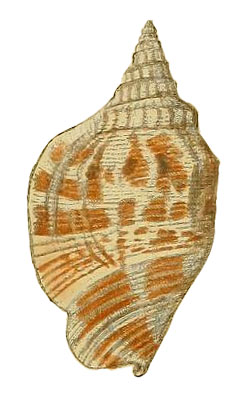
- "Der gelehrten Gesellschaft, welche vom höchstsel. Könige Friedrich den Fünften, aus Dännemark nach Arabien gesandt worden, haben wir in der Conchyliologie manche Aufklärung, und die Bekanntschaft mit vielen im rothen Meere entdeckten Gattungen zu verdanken. Dahin hehöret nun auch diese Art von Besaanssegeln. Ihe Flügel ist breiter, bey seiner Lippe dicker und ebgerundeter, auch unterwärts ausgebogener und ausgeschweifter, als man es bey andern von dieser Familie anzutreffen pfleget. Starke Streifen laufen über die Oberfläche hinüber, und werden bey der Basi so erhoben, und dicke, daß man sie für ribbenartig ausgeben kann. Auf der Höhe des Rückens stehet eine Reihe merklich erhobener Knoten. Die zehen Umläufe des weit ausgestreckten Wirbels werden von faltenartigen Knoten wie bekrönet. Die Grundfarbe dieser Schnecke ist weiß, sie wird aber von gelblichen Flecken und Wolken so bunt gemacht, als es einige der gefleckten Krabben zu seyn pflegen. Der Bauch dieser Conchylie sitzet voller länglichen Falten. Die inneren Wände werden von lauter Furchen und Streifen geriffelt und rauh gemacht. Der Wohnort dieser seltenen Schnecken ist das rothe Meer."

Strombus vittatus maris rubri Chemnitz, 1787 pl. 157 Fig. 1496 Ex Museo Spengleriano
1791
Gmelin, 1791:3517 cited as Strombus vittatus var. [delta] Chemnitz, 1787, pl. 157, fig. 1496, which was cited by Röding, 1798.
1842
Strombus deformis G.B. Sowerby 1842 (1847), p. 27:
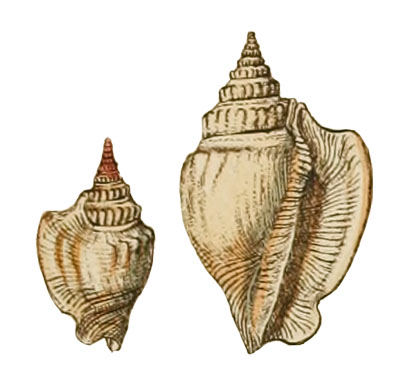
- "5. S. DEFORMIS (pl. vi. f. 1, 8) Griffith's Cuvier, Moll. pl. 25.
- "T. sub-fusiformis, spiraliter striata; spira mediocri; anfractibus angulatis; labio externo interne striato, ad anfractum ultimum elevato, prope spiram paululum emarginato; sinu antico mediocri, labio interno striato."
- "A dull white shell, spirally striated all over, except in the middle of the body whorl in front; the spire plicated, the anterior canal of the aperture elevated, the outer lip slightly emarginated at the upper angle, both lips striated with raised lines, the sinus of the outer lip not very deep."
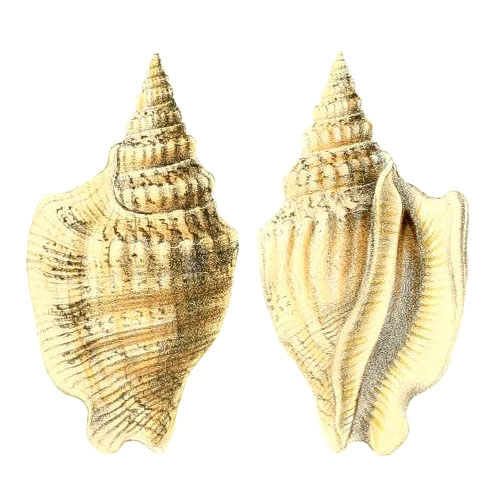
Strombus deformis in Sowerby, 1842, pl. VI, fig. 1, 8
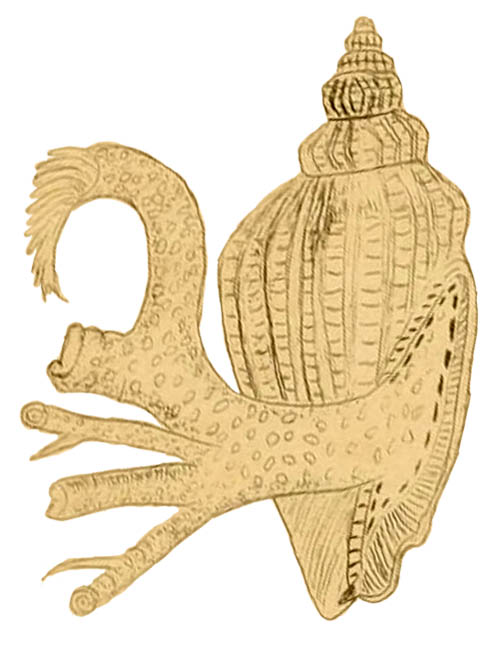
Strombus plicatus in Gray, 1842, pl. 2, fig. 5
Comment
- This is in all probability not Dolomena plicata, but Canarium labiatum. This synonymy has been noted by Abbott (1960).
Comment Kronenberg: There is no male copulatory organ visible; all I can see is (from above to below)
- metapodium with operculum
- propodium
- left eye-stalk
- snout
- right eye-stalk
- Therefore I think the specimen is female.
1843
Strombus sibbaldii in Kiener, 1843, pl. 12, fig. 2
1844
Strombus deformis in Duclos, 1844, pl. 23, fig. 7, 8
1851
Strombus deformis in Reeve, 1851, Strombus, pl. 19, fig. 55 a, b
1891
Original Description of Strombus yerburyi by Smith, 1891, p. 418:
- "Testa parva, subfusiformis, alba, plus minus lutescenti balteata; spira gracilis, producta, longit. totius 2/5 subaequans; anfractus normales circiter 9, superne concavi et marginati, supra medium rotunde angulati, infra angulum fere recti, longitudinaliter plicati, transversimque sulcati; plicae vel costae numerosae (in anfr. penult. ad 24, in ultimo 16-17, inferne sensim evanescentibus paucis labrum versus, caeteris majoribus et magis distantibus, superneque subnodosis), paurce supra spiram variciformes; sulci regulares, supra et inter costas continui, interstitia vix aequantes; anfr. ultimus brevis, basim versus paulo constrictus; labrum dilatatum, ad marginem anfractus superiorem productum, intus et extus incrassatum, sulcatum, ad marginem acutum ; apertura angusta, alba; columella callo crenulato tenui rufo notato induta."
- Locus typicus: Aden, between tide-marks or at low water
- Dimensions: "Longit. 35 millim., diam. maj. 19."
- "This species recalls to mind S. cancellatus of Pease, a Sandwich-Island form. It differs in colour, in the greater length ot the Spire, its larger size, and the different tint of the columellar callus. There are three specimens of this very interesting species in the Museum, two presented by Mr. Baynham and one by Major Yerbury. The specimen in best condition exhibits a faint pinkish tint upon the upper part of the spire. Most of the pale brownish or luteous colour is upon the back of the shell, and seems to be divided up into zones by a submedian white band and a narrower one upon the angle above. The constriction of the whorls at the upper part forms a very distinct sutural margination."

Strombus yerburyi Smith, 1891, pl. XXXIII, fig. 5
1960
Localities (Abbott, 1960)
- Egypt, Zafaran, 50 miles south of Suez (USNM)
- Egypt, <geb Zebara (S. Vatakiotis, ANSP)
- Egypt, Jubal Island (cited after Issel & Canefri, 1876, p. 345)
Specimens from private collections
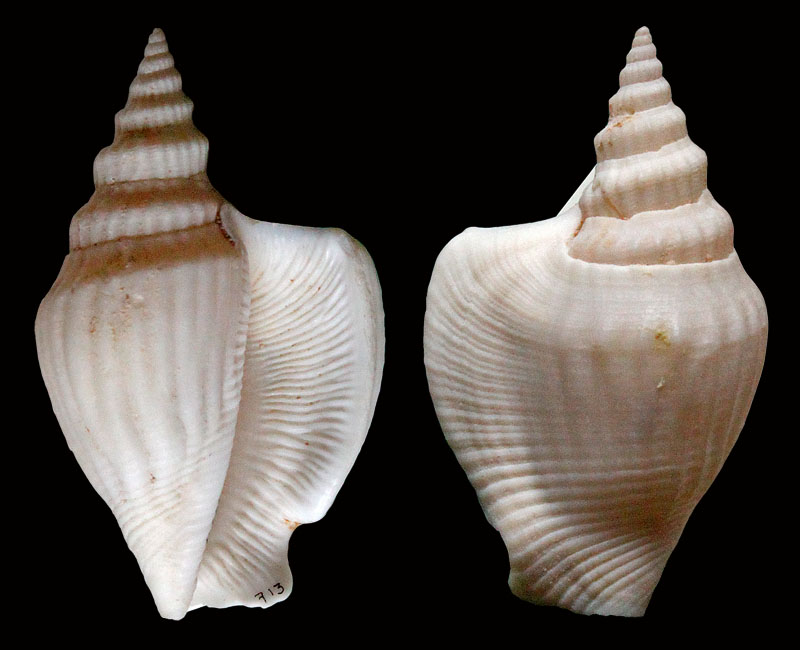
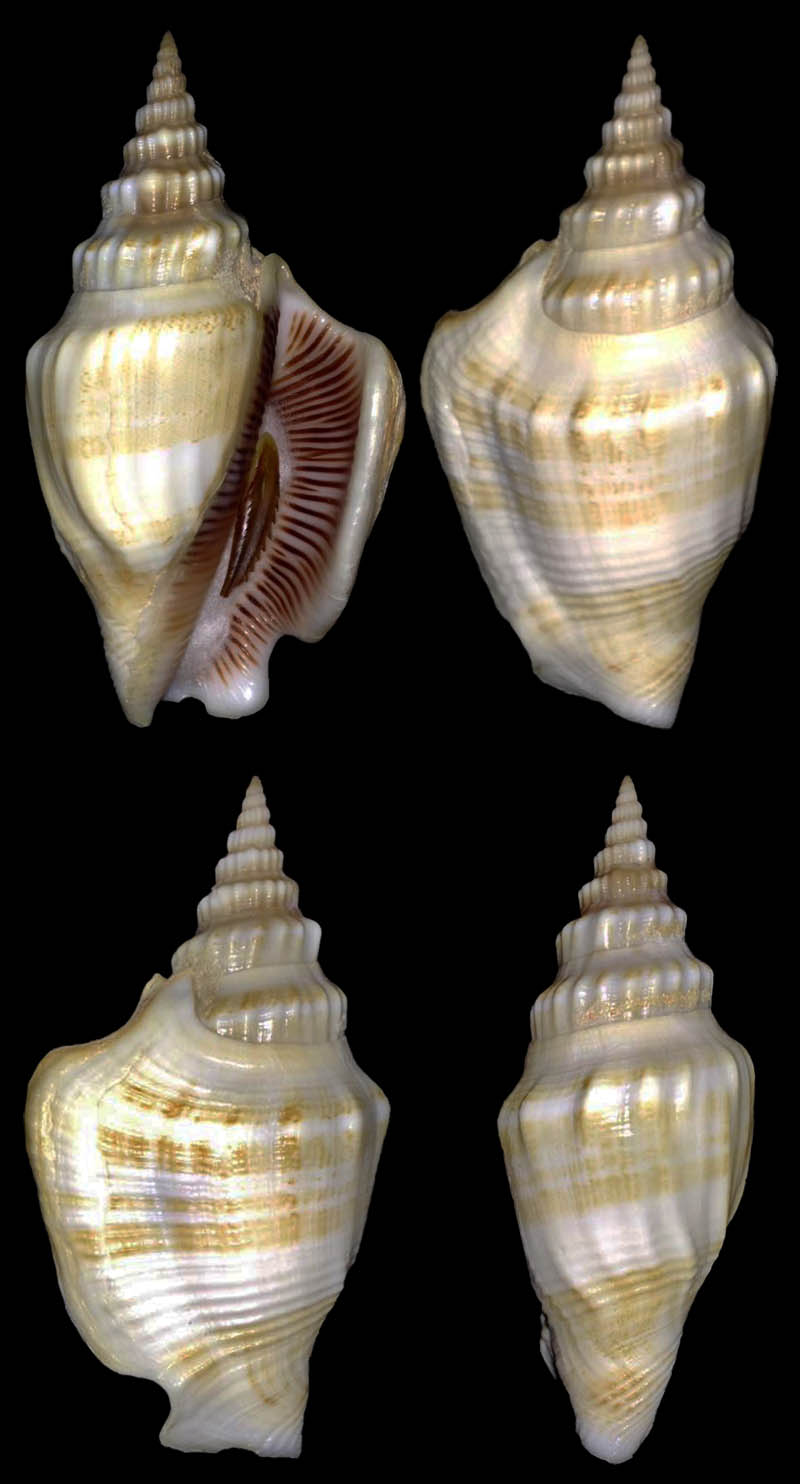
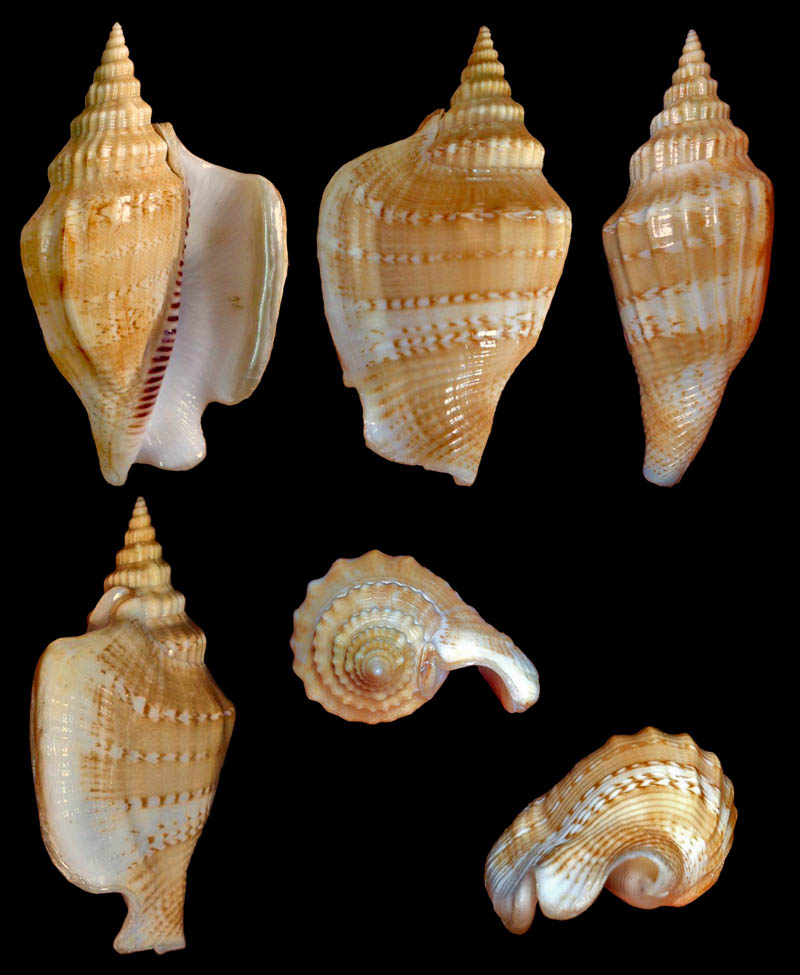
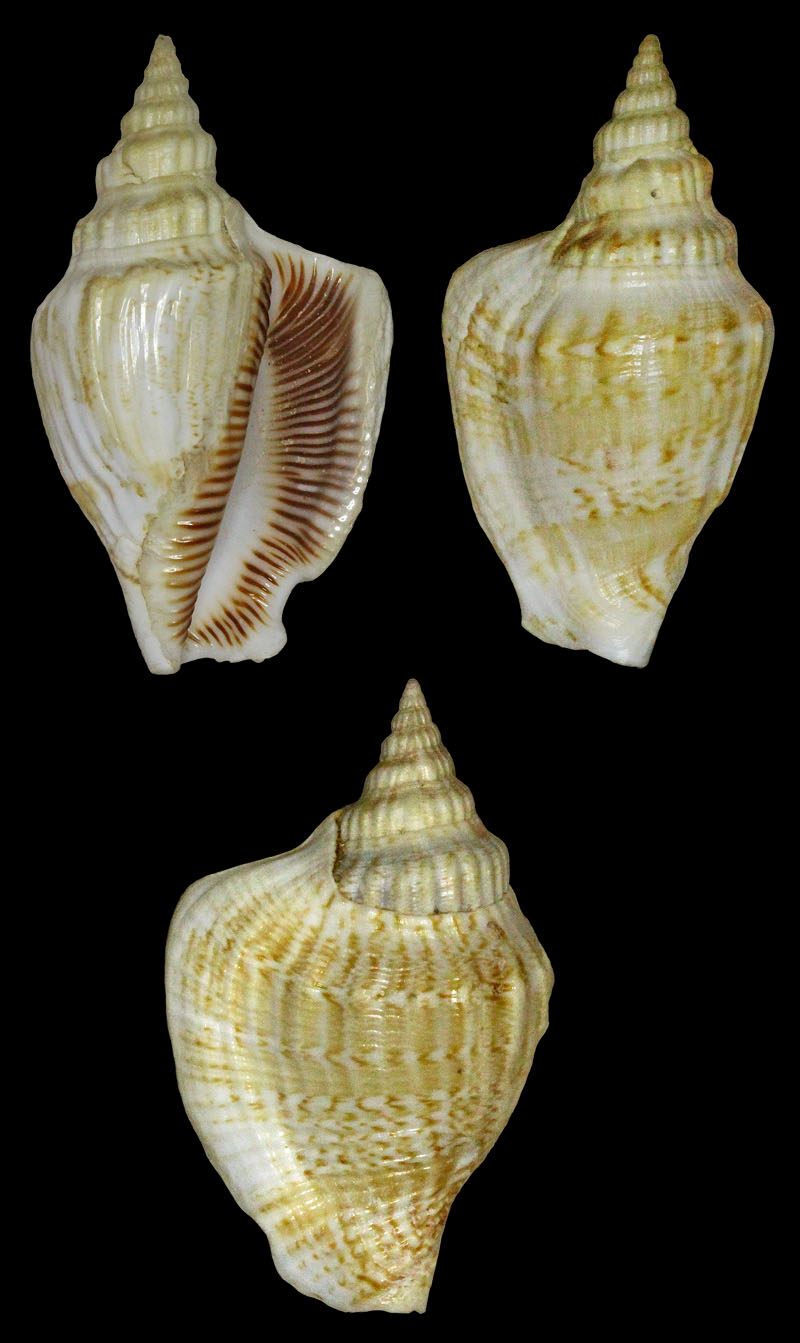
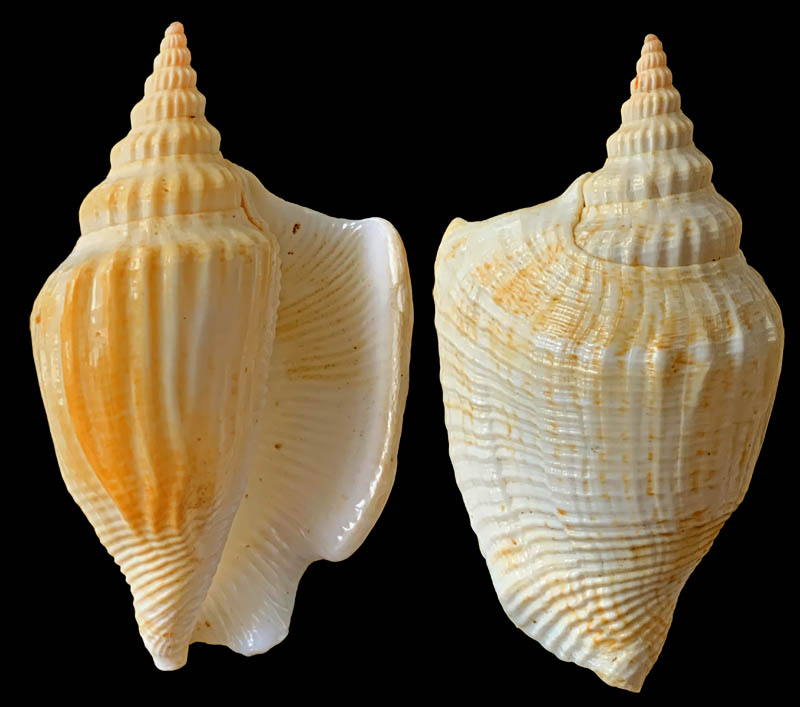
Strombus (Dolomena) plicatus plicatus; Ras Matarma, Gulg of Suez, Sinai, Egypt; dead on beach; 1969; Coll. Gijs Kronenberg No. 713
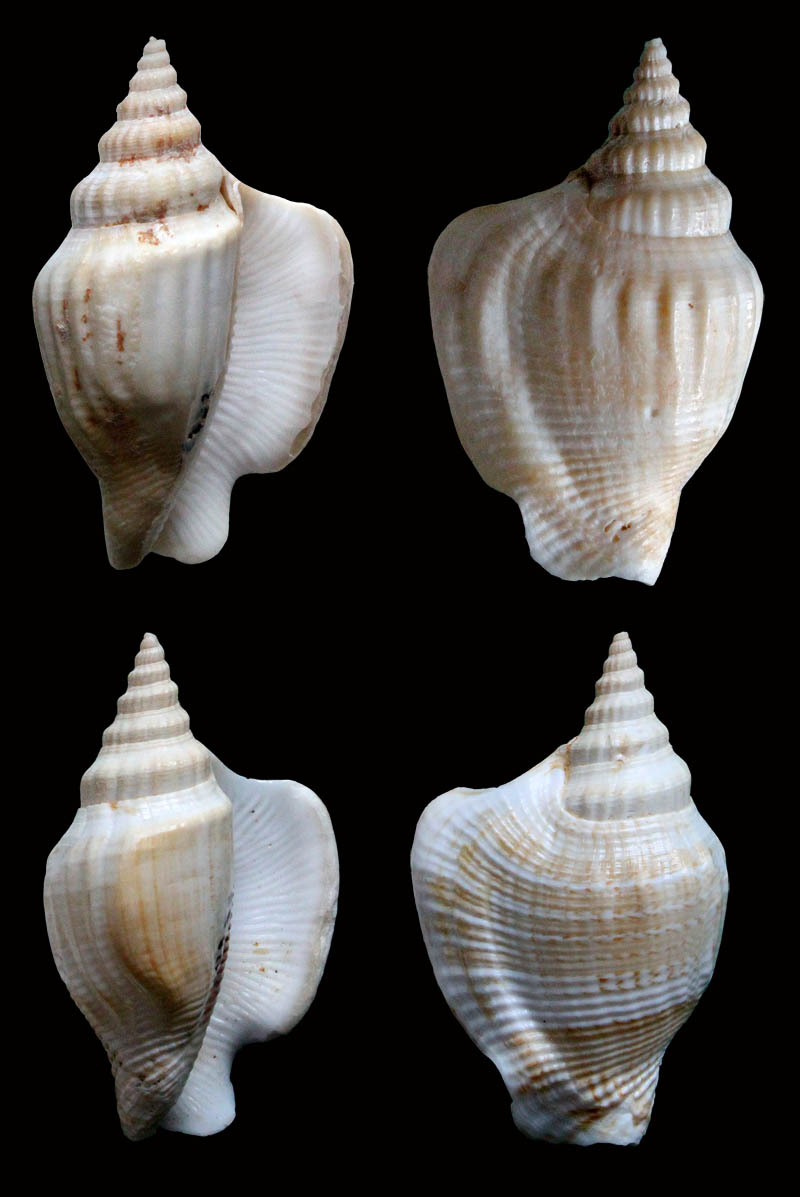
Dolomena plicata; Ras Zafarana, Gulf of Suez, Egypt; 9/1992; Coll. Gijs Kronenberg No. 6323
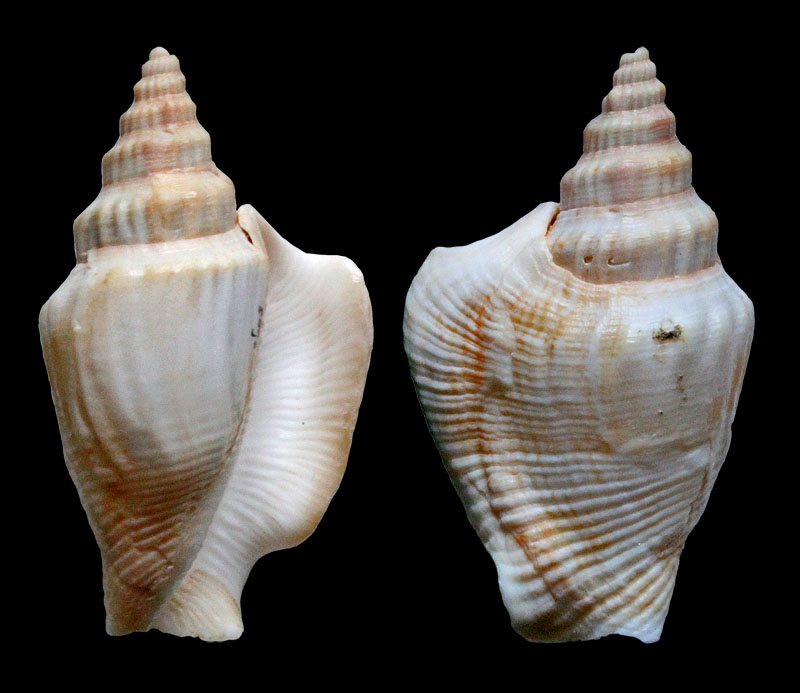
Dolomena plicata; Sharm el Naga, Egypt, Red Sea; dead on beach, 70,7 mm; Coll. Kronenberg No. 5496
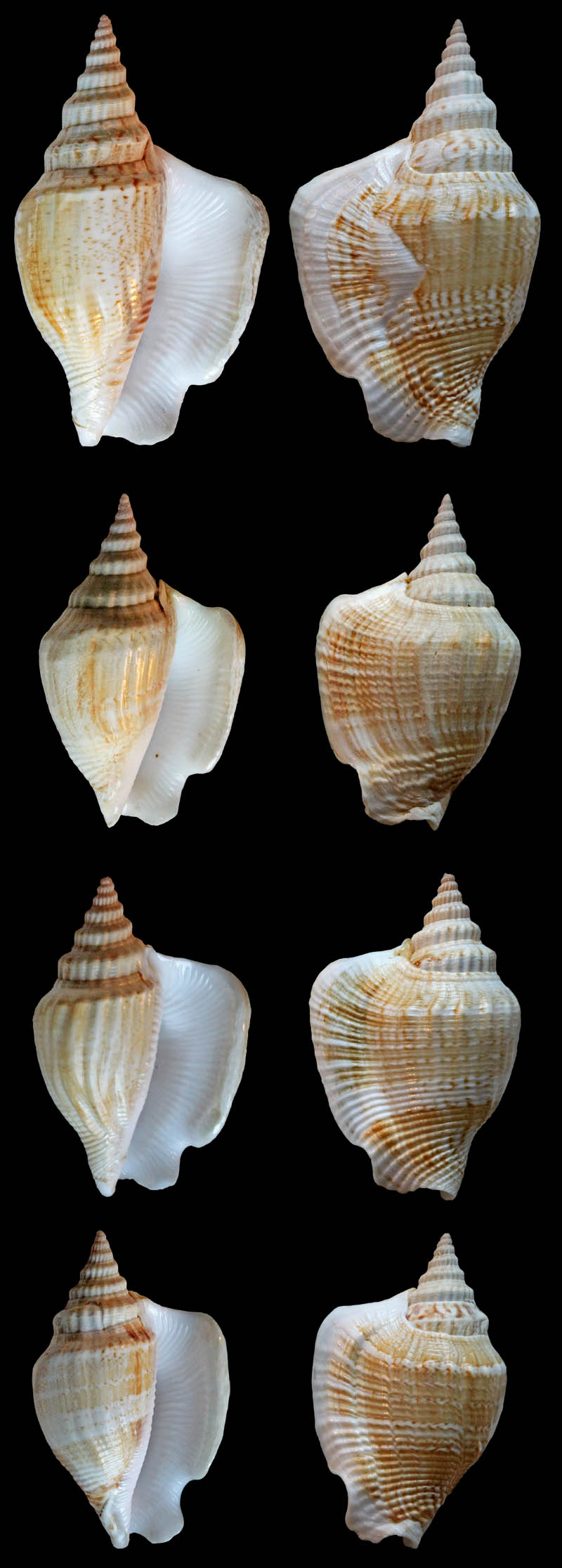
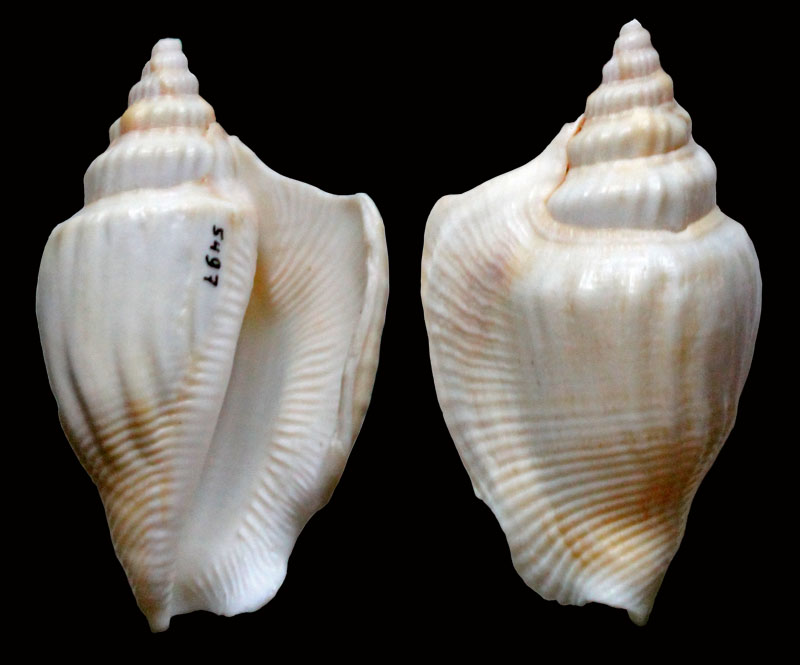
Dolomena plicata; Red Sea; Coll. Kronenberg No. 5497
References: